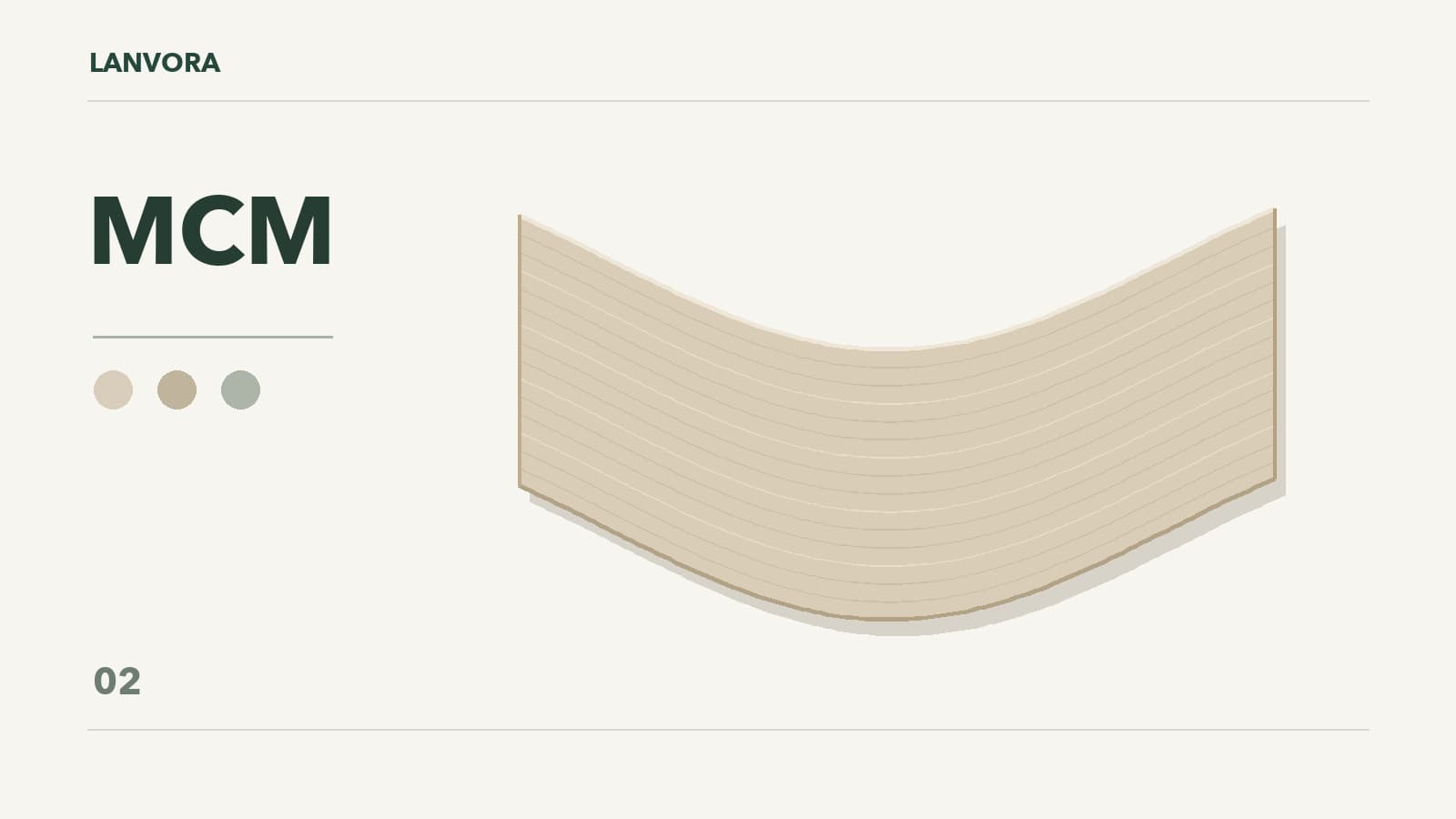
Planning to source MCM flexible stone from China, or looking for a soft porcelain manufacturer or supplier for your project? Confirm the material and design first, then consider the texture, curved-surface requirements and installation system together to prepare a clearer enquiry.
A stone finish that continues from a flat wall onto a curved wall or column needs more than the right colour. The material must also suit the shape. MCM flexible stone is one category worth exploring: a mineral-based decorative finish offering natural-material textures, with some products designed for curved applications.
For distributors, contractors and project buyers, the central question is whether the selected texture, format and supporting system suit the substrate, curves and exposure of the actual project. This guide introduces MCM through that practical decision.
The cover and diagrams are original selection illustrations, not photographs of products for sale or completed projects.
What is MCM flexible stone?
MCM stands for Modified Clay Material. Published technology information describes this family as using processed mineral raw materials to form textured finishes. It is not a solid block of natural stone cut into a sheet that can bend without limits.
Catalogues may also use the term “soft porcelain”. Confirm the actual material composition rather than treating different names as proof of identical specifications.
MCM products can reproduce stone and other surface effects. Thin, flexible designs in some ranges offer a direction for curved or shaped surfaces. Flexibility, thickness, dimensions and permitted bending conditions still require model-specific confirmation.
MCM and PU faux stone panels are different material categories. Confirm the base material and physical sample before discussing bending, installation and performance documents. Both may support a stone-look design, but they are distinct product categories.
What design possibilities does it offer?
One reason to consider MCM is continuity of material across a space. Where a flat wall meets a curve, a suitable flexible finish may be worth evaluating rather than assuming every material shown in a rendering can follow that shape.
PHOMI’s published ranges, for example, include travertine and sandstone effects as well as concrete and wood looks. This illustrates the variety available within flexible finishes; it does not mean LANVORA supplies every option. Confirm actual choices against the current information and samples offered for your enquiry.
Review close-up texture, the overall effect at normal viewing distance and colour under the proposed lighting. Pattern direction, sheet format and joint design can matter more than an isolated product photograph.
Which projects merit a mock-up?
| Proposed location | Design aim to evaluate | Questions for the mock-up |
|---|---|---|
| Interior feature wall or reception area | A consistent stone-look finish | Do colour, lighting, formats and joints work together? |
| Curved wall or column | Continuity from flat to curved surfaces | Does it fit the actual curve, and where do joints fall? |
| Localised commercial refurbishment | Coordination with existing finishes | Is the substrate suitable, and how are edges resolved? |
| Exterior or partly sheltered wall | Related interior and exterior design | Are model suitability, fixings and waterproofing coordinated? |
These are evaluation directions, not general suitability guarantees. Floors, worktops, direct shower exposure, heat-adjacent areas and special overhead locations need explicit model-specific use guidance. Wall suitability does not establish suitability everywhere.
Three checks for curved surfaces
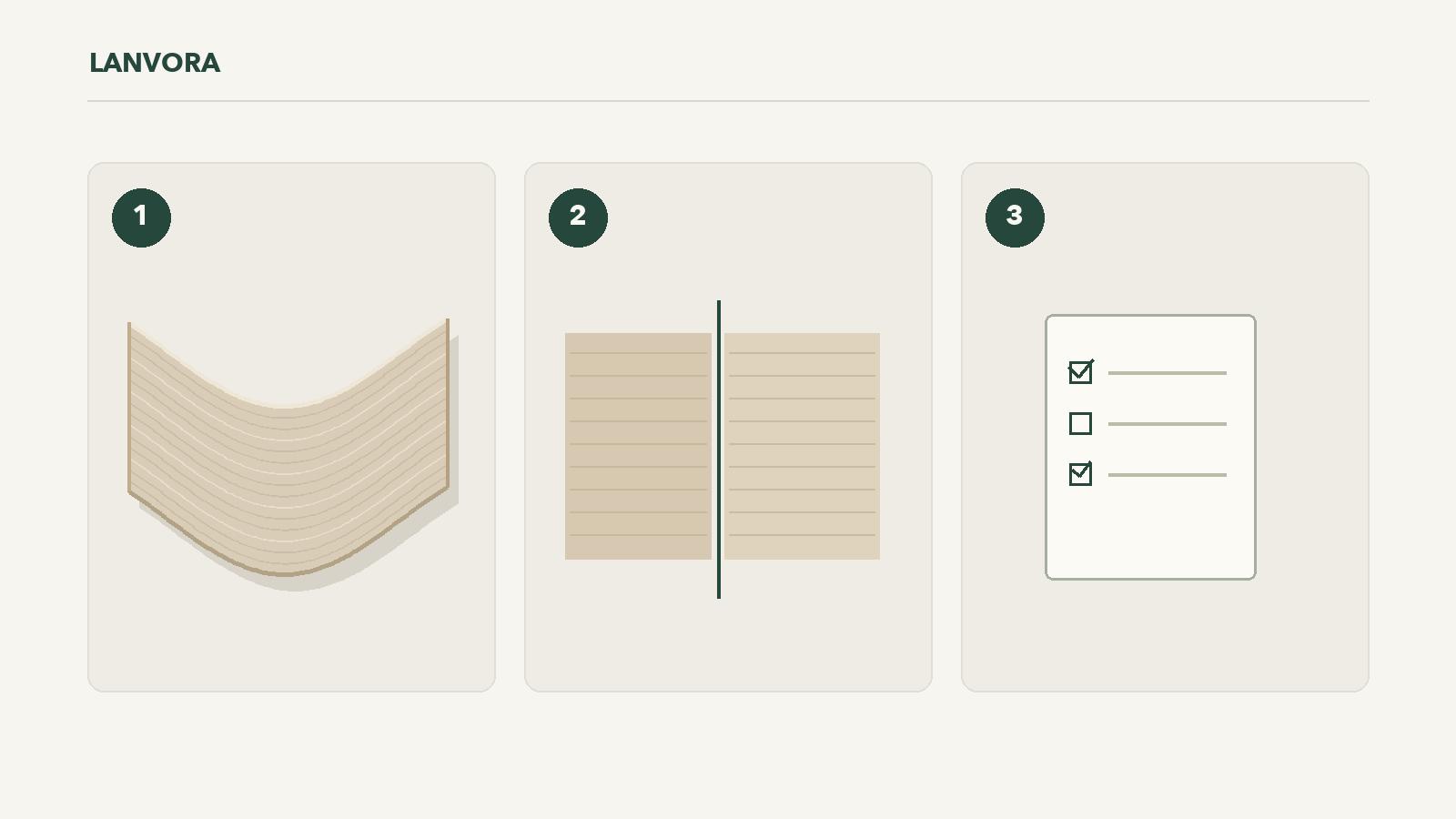
Confirm the curve first. Provide drawings, curvature information and site photographs. Ask the supplier to confirm permitted bending direction and application conditions. A small piece flexing by hand does not establish that a full sheet suits every radius.
Then plan joints and layout. Coordinate texture direction, sheet format, corners, openings and end details in one layout. Where the curve is a design focal point, resolve joint positions through a mock-up rather than improvising on site.
Finally, review the substrate and system. Determine the substrate, adhesive, joint materials and edge treatments from the model’s documents and project conditions. A conceptual fitting diagram is not an installation guide or evidence that the existing substrate is ready.
What to ask an MCM manufacturer or supplier in China
Explain which type of flexible finish you need, then confirm the material composition, sample and source of supply. For curved walls or columns, discuss the drawings, mock-up requirements and installation conditions together. Clarify which information the material supplier will provide and which decisions require review by the person responsible for installation.
If a catalogue groups products under “soft porcelain”, still check the composition, model and intended uses. The name alone is not a sound basis for comparing prices.
Performance documents and the complete budget
“Mineral-based”, “flexible” and “thin” do not establish a fire classification, long-term weathering, waterproofing or environmental performance. Obtain documents matching the model, thickness and assembly, then review them against destination and project requirements. This guide assigns no universal certification or rating.
Compare the finish price together with substrate preparation, necessary accessories, joints, edge treatments, layout waste, packaging and freight. Ask for effective coverage per piece, carton quantity, carton dimensions, weight, minimum-order conditions and expected lead time. Nominal sheet dimensions alone may not establish the quantity required.
After mock-up approval, agree on batch colour range, pattern direction, acceptance samples, protective packaging and arrival checks. Avoid fixing a waste percentage or promising a complete-wall result before reviewing drawings and approved samples.
Common questions: bending and existing walls
Can every MCM product bend freely? No. Permitted bending conditions depend on the particular product and application. Obtain the supplier’s guidance and, where needed, trial it on the actual curve.
Can it cover an existing wall directly? First assess stability, flatness, moisture conditions and compatibility with the selected system. The person responsible for installation should confirm the preparation method.
Should I choose MCM or PU? Include PU panels when comparing pronounced rock relief. For a finish continuing around curves, focus on evaluating suitable MCM models. Appearance, samples, documents, installation conditions and total budget should decide the selection together.
Send your MCM requirements to LANVORA
Sourcing decorative finishes from China for interior walls, curved surfaces or a bulk project order? LANVORA works closely with Chinese suppliers to help buyers select MCM flexible stone and PU faux stone panels, confirm supply information and obtain quotations. We coordinate discussions around textures, specifications, quantities and project conditions to help customers secure competitive prices. If the material is undecided, start with the intended effect and compare suitable options.
Share your project requirements and indicative budget so we can discuss suitable materials and supply terms. Final quotations depend on the confirmed specifications, quantities, packaging and delivery terms.
Include the following in your enquiry:
- Destination country or region, interior or exterior use and estimated area.
- Preferred texture and colour, site photographs and wall or column drawings.
- Curve conditions, substrate information, joint and corner requirements.
- Required performance documents, indicative quantity, arrival target and sample needs.
Contact LANVORA with your MCM flexible stone requirements to discuss textures, sample arrangements and specific supply terms.
Material references
MCM technology: PHOMI; flexible finishes and texture ranges: PHOMI eCovering; PU material category: GenStone. These explain material categories, imply no partnership or authorisation, and do not extend their product performance to other LANVORA-supplied products.