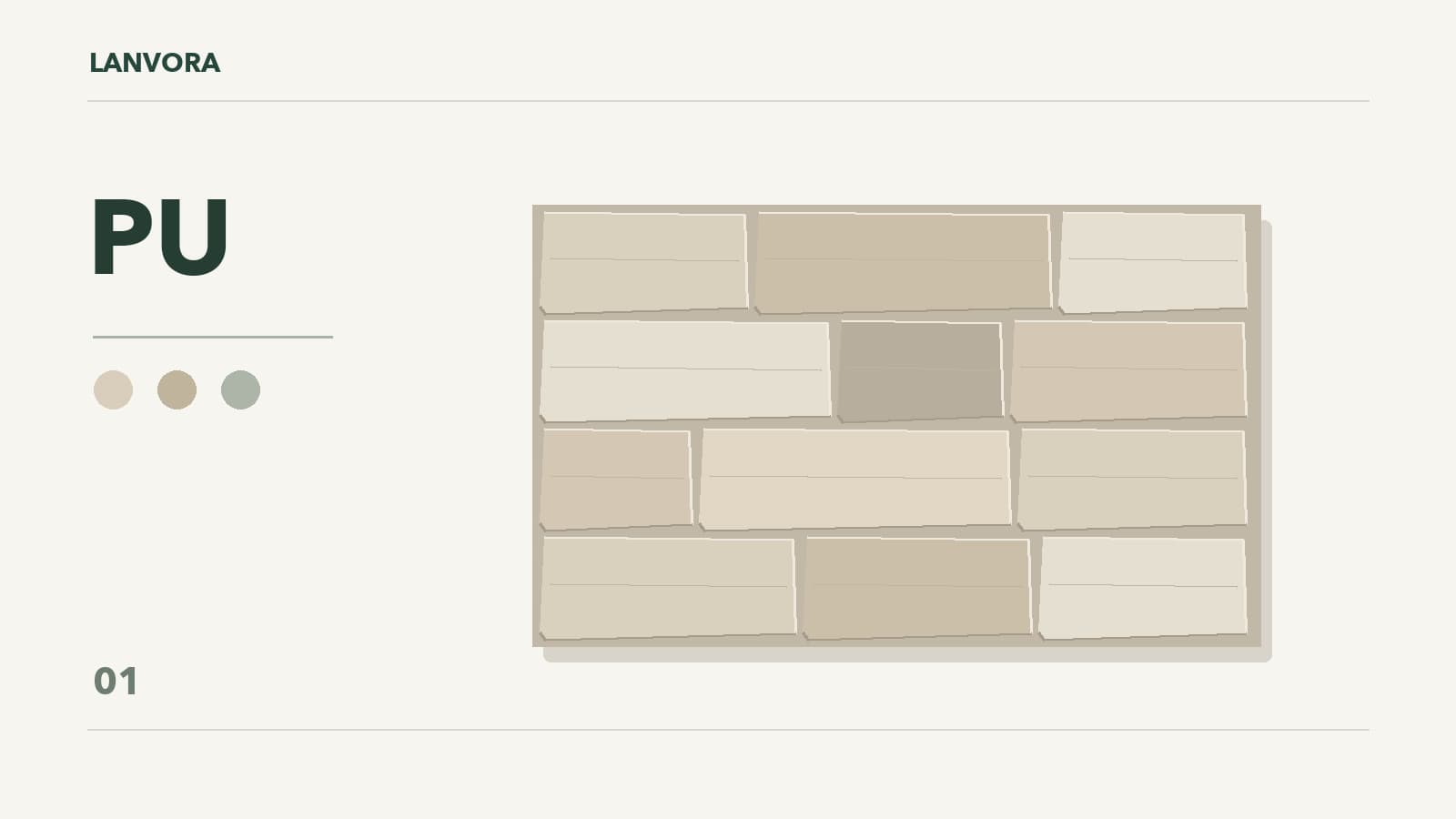
Looking for a PU faux stone panel manufacturer or supplier in China for a retail interior, showroom or feature wall? Start with the stone effect you want, then compare samples, finishing components and the full supply terms.
Stone texture can give a reception area, showroom or interior feature wall a stronger visual identity. PU faux stone panels are one option to consider: they use a polyurethane base with a moulded, finished surface to create a stone effect. A useful comparison looks beyond the texture to the intended location, panel joints and finishing details.
This guide is for distributors, contractors and project buyers evaluating PU decorative panels. When enquiring, use “PU faux stone panels” and include a reference image and material description, rather than relying on the ambiguous term “soft stone”.
The cover and diagrams are original selection illustrations, not photographs of products for sale or completed projects.
What are PU faux stone panels, and how do they differ from MCM?
PU stands for polyurethane. Common faux stone panels use moulded surfaces to suggest rock blocks, stacked stone or rough stone textures. Surface relief and the appearance of several joined panels are useful starting points for selection. These are decorative finishes and should not be specified as load-bearing stone.
MCM means Modified Clay Material, a separate family of mineral-based finishes. Both categories can have a stone appearance, but their bases and product systems differ. Do not transfer bending capabilities, installation requirements or test results from one to the other. The term “soft stone” does not establish that a PU panel can bend around a column.
Why include PU panels in a material shortlist?
Their initial appeal is visual depth: raised and recessed areas can create a focal point under side lighting. For designs seeking a pronounced rock profile, this category is worth including in a sample comparison.
Some high-density polyurethane products offer lightweight handling. However, thickness, density, panel format and fixing requirements vary. A material name alone cannot establish weight per square metre, installation speed or total cost.
Review both close-up detail and a larger wall layout. An attractive single sample may repeat noticeably across a wall; lighting direction, shadows and joint placement also change the result.
Which spaces are worth evaluating?
Start with the desired effect, then check whether the particular model suits the location.
| Proposed location | Design aim | What to check |
|---|---|---|
| Interior feature wall or reception area | A stone-textured focal point | Relief, colour under lighting and edge finishes |
| Retail or showroom display wall | A defined display backdrop | Joined panels, pattern repetition and cleaning |
| Localised refurbishment | An additional material layer | Existing substrate, finished depth and fixing method |
| Exterior or damp location | Continuity of the design | Written model suitability, joints and wall assembly |
These are evaluation directions, not blanket suitability claims. Locations near flames, prolonged heat or special fire requirements need separate review against project requirements and product documents. Appearance alone is insufficient.
Three details to inspect before ordering
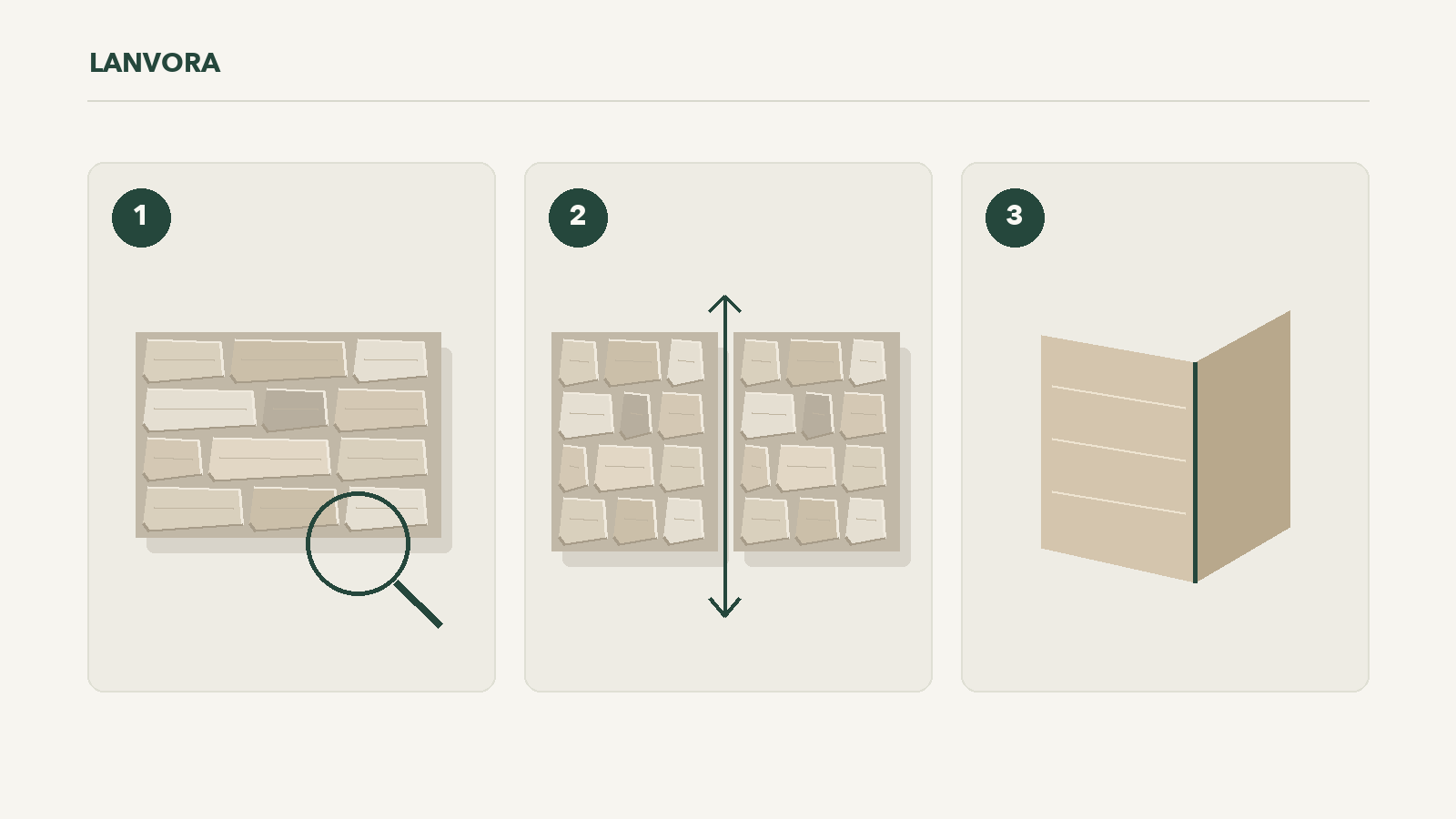
First, texture. Confirm colour, panel dimensions, thickness and available patterns. Use a physical sample to assess feel and coating appearance. Photographs help create a shortlist but should not be the sole acceptance reference.
Second, joints. Assemble several samples in the proposed direction. Check visible seams, repeating patterns and the treatment of cut edges. Ask whether nominal panel dimensions equal effective coverage.
Third, finishing components. Review internal and external corners, ends, tops and junctions with openings. Follow the model-specific installation instructions for substrates, adhesives and mechanical fixings; “stick it on” is not a complete method.
Choosing a PU faux stone panel manufacturer in China
When assessing a factory or supplier, clarify whether they handle manufacturing, sales or sourcing coordination. Confirm where the selected product is made and whether the approved sample represents the bulk order. Beyond a “factory-direct” description, look for product-specific information, clear packaging and delivery terms, and an agreed point of contact for quality issues.
Compare the complete purchasing cost
The panel price is only part of the budget. Compare panels, corners, trims, necessary accessories, cutting waste, packaging and transport on the same basis.
Ask for coverage per panel, panels per carton, carton dimensions, gross weight, minimum-order conditions and expected lead time. Availability and terms require confirmation. Waste depends on layout, openings and cuts; do not assume a fixed allowance before reviewing the drawings.
Also agree on sample approval, acceptable batch colour variation and arrival inspection. A clear enquiry produces more comparable answers than a price-per-square-metre question alone.
Common questions: water, fire and price
Does water resistance mean a wall cannot leak? No. Surface water resistance and wall waterproofing are different matters. Joints, penetrations, substrates and terminations need project-specific review.
Do all PU panels have the same fire performance? The abbreviation does not establish a classification. Review documents matching the model, thickness and assembly against applicable local project requirements. This guide promises no universal rating.
Are they always cheaper than natural stone? Compare complete proposals for the same area and design expectations, including accessories, labour and freight. Individual piece prices cannot establish the final difference.
Send your PU panel requirements to LANVORA
Comparing PU faux stone panel suppliers in China? LANVORA works closely with Chinese suppliers to help overseas distributors, contractors and project buyers source PU faux stone panels and MCM flexible stone. We discuss designs, specifications and order quantities with suppliers to help buyers obtain competitive quotations, while checking packaging and delivery terms. Start with a reference image and explain whether your priority is a pronounced rock profile, a particular stone colour or the overall effect of the space.
Send your requirements list and indicative budget so the quotation reflects the actual project. Compare offers on a like-for-like basis for specifications, quantities and delivery terms. Final pricing depends on the confirmed requirements.
To support the enquiry, include:
- Destination country or region, interior or exterior use, and site photographs.
- Estimated wall area, preferred texture and colour, corners and openings.
- Required performance documents, target arrival date and project stage.
- Indicative quantity and whether you would like to discuss samples.
Contact LANVORA with your PU faux stone panel requirements to discuss options, sample arrangements and specific supply terms.
Material references
Polyurethane panel material explanation: GenStone; MCM material technology: PHOMI. These explain material categories. Their brands, product specifications and benefits do not represent LANVORA-supplied products or imply a partnership or authorisation.